
Offerings
Grief Tending
Individual and group grief companioning, community grief circles, grief rituals, and grief education in Eugene, Oregon · In-person and virtual offerings
Welcome. There is place for you and your grief here. You belong.
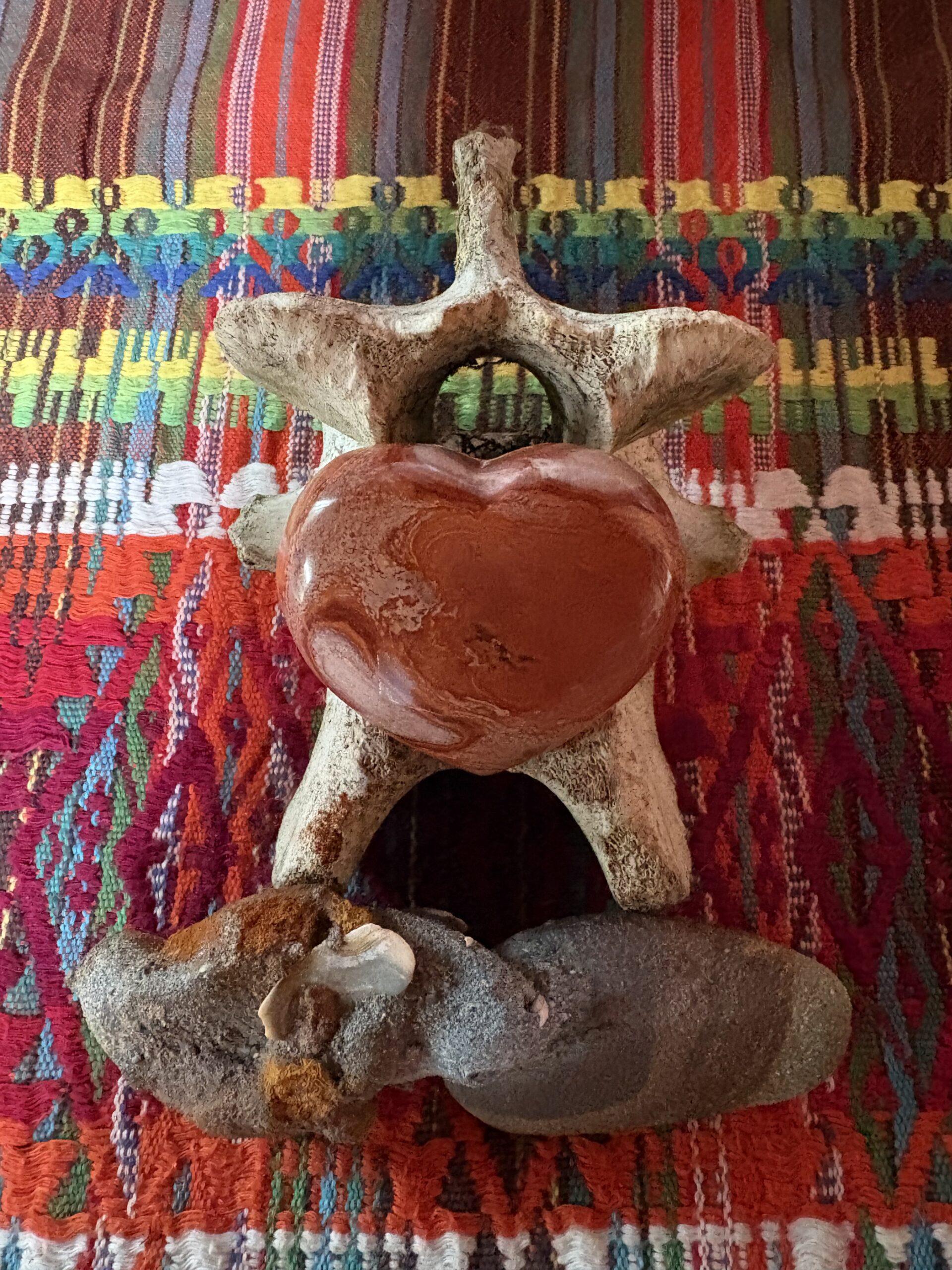
Grief tending
For as long as we have loved, we have grieved.
Grief invites us into remembrance, of those we have loved, the lives we have lived, the dreams and stories we have carried, and the relationships that continue to shape us.
Grief enters our lives in many ways. It may arrive through the death of someone we love, a diagnosis, a changing relationship, caring for someone who is ill, the unraveling of a dream, or the quiet realization that life is inviting us to open to the unknown. Some grief is deeply personal. Some is carried through families and across generations. Some belongs to our communities, our cultures, and our relationship with the living Earth.
Like birth, grief is its own kind of labor. It invites breath, patience, tenderness, and trust as we grow into new ways of loving, remembering, adapting, and living with what has changed.
For as long as people have loved, they have gathered in times of loss. Around fires, beneath trees, beside rivers, at kitchen tables, in homes, and in places of prayer, people have sung, wept, remembered, prepared meals, shared stories, and kept one another company. Across cultures and throughout time, grief has found its way toward community.
Every person’s relationship with grief is their own. Together we make room for your experience, your relationships, your values, and the ways you live, love, and understand your life. Whether your grief feels newly arrived or has been with you for many years, whether you are surrounded by loving community or longing for greater connection, you are warmly welcome here.
Go deeper
Ways of tending grief
Individual and group companioning, community circles, rituals, and education — open any section for details and sliding-scale fees.
Individual Grief CompanioningA place to arrive exactly as you are. Sliding scale: 60 minutes $55–$88 · 90 minutes $88–$122.
Individual grief companioning offers a place to arrive exactly as you are. Together we listen for the unique language of your grief, honoring your relationships, your values, your lived experience, and whatever is asking for your attention.
Our time together may include listening, supportive witnessing, conversation, embodied awareness, time in nature, ritual, movement, creativity, sound, silence, or simply sharing presence. Like the changing seasons, every relationship with grief continues to unfold, revealing new places of tenderness, remembrance, resilience, and love.
Sliding Scale
60-minute sessions: $55–$88
90-minute sessions: $88–$122
Group Grief CompanioningSmall group series, 90 minutes, 6–8 participants. Sliding scale $35–$55 per person, per gathering.
Small groups offer opportunities to build relationship over time. As trust grows, people often discover that gathering with others creates space for connection, perspective, courage, tenderness, and belonging.
Groups may gather around a shared life experience or simply through a shared desire to cultivate a deeper relationship with grief. Every person’s experience is honored, and every gathering is shaped by the people who are present.
Small Group Series
90 minutes • 6–8 participants
Sliding Scale: $35–$55 per person, per gathering
Community Grief CirclesThrough story, song, movement, ritual, silence, and gathering together, we remember that grief has always belonged in community.
Community grief circles welcome the many ways grief is carried within our hearts, our families, our ancestors, our communities, and our relationship with the living Earth. Through story, song, movement, ritual, silence, and gathering together, we remember that grief has always belonged in community.
People arrive carrying many different stories, identities, traditions, beliefs, and ways of living. Some come with words ready to be spoken. Others come simply to be present. Every way of arriving enriches the circle.
Grief RitualsPublic and private grief rituals for individuals, families, chosen families, organizations, and communities. Community grief rituals: sliding scale $45–$65 per person.
Ritual has accompanied humanity across cultures and throughout time. It has offered people ways to remember, to grieve, to celebrate, to give thanks, to honor change, and to express what words alone cannot always hold.
Each ritual grows from the people gathered, the place, and the intention we are tending together. Together we create opportunities for love, grief, remembrance, gratitude, and belonging to be expressed in ways that honor the people who are present and the many traditions, values, and relationships they carry.
Public and private grief rituals are available for individuals, families, chosen families, organizations, and communities.
Community Grief Rituals
(approximately four hours)
Sliding Scale: $45–$65 per person
Grief EducationLearning about grief often brings greater understanding of ourselves, one another, and the many ways love continues throughout a lifetime.
Learning about grief often brings greater understanding of ourselves, one another, and the many ways love continues throughout a lifetime.
Together we explore personal, familial, ancestral, collective, ecological, and anticipatory grief through conversation, reflection, and shared learning. These offerings cultivate language, understanding, and confidence while honoring the diverse traditions, values, identities, and lived experiences that shape each person’s relationship with grief.
Grief education is available through individual sessions, workshops, community presentations, organizations, schools, faith communities, and professional trainings.
When the Ground ShiftsSometimes life invites us into landscapes we never expected to travel.
Sometimes life invites us into landscapes we never expected to travel. Familiar ways of being begin to soften, new questions emerge, and our hearts discover they are capable of holding more than we once imagined.
These seasons invite us to honor what has been loved, to welcome what is asking for our attention, and to discover that grief can become a lifelong companion in remembering what matters most. Along the way, many people find a deepened capacity for tenderness, courage, gratitude, forgiveness, and a more intimate relationship with life itself.
Begin here
If you have found your way here, I welcome you.
We can begin with a simple conversation and explore what feels most supportive for you.